St. Cloud Pro Concrete
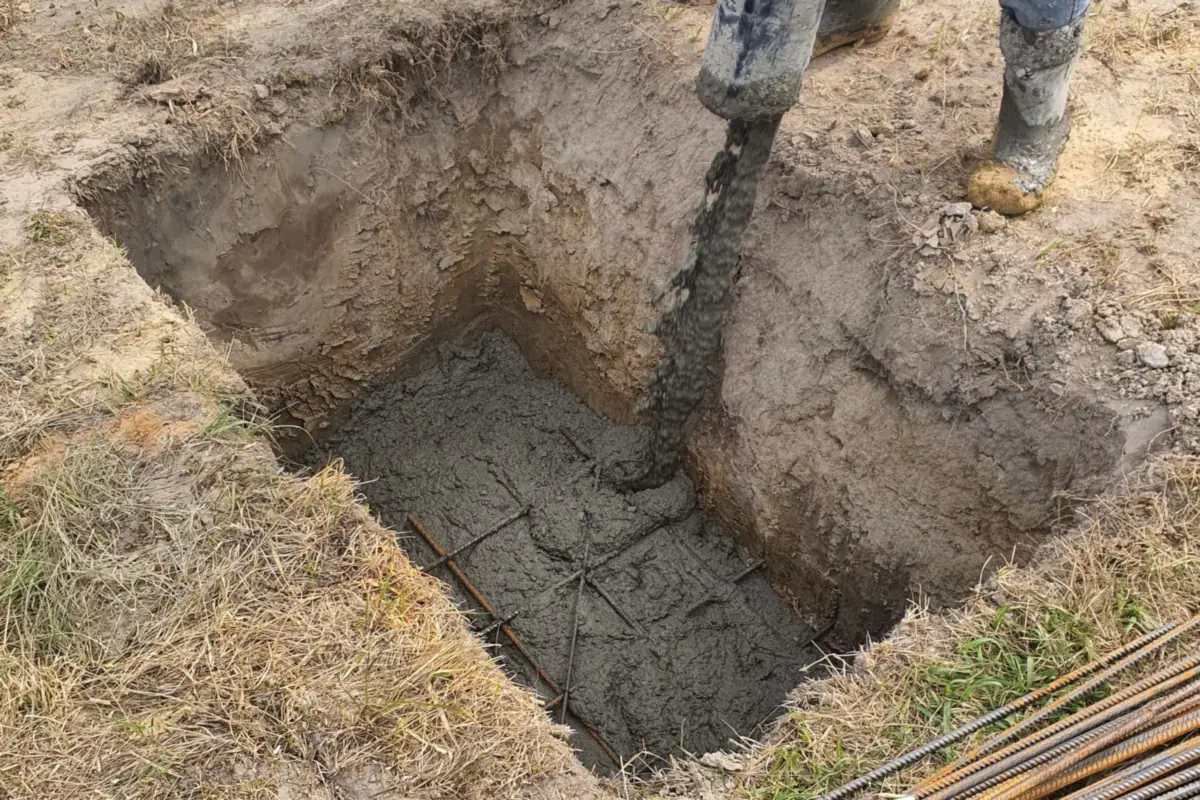
Concrete pumped through a hose into a square footing hole, steel reinforcing bars on the ground beside it

St. Cloud, FL Code

Termite Slab Pretreatment in Florida

In Florida, a slab that is part of new construction needs termite protection before it is poured: under Section R318 of the Florida Building Code, Residential, treated soil is covered with a vapor retarder of at least 6 mil, retreated if rain reaches it first, and certified by the licensed pest control company. This guide sets out each rule in order and what it means for patios and walks poured against a house.

6 mil
Minimum vapor retarder over treated soil (R318.1.4).
1 ft
Exterior concrete within this of the walls gets treated too (R318.1.6).
4 in
Inspection space above patio and garage slabs (R318.7, exception 3).

Last reviewed November 2026. Code text: 2023 Florida Building Code, Residential, 8th Edition, Section R318.

Termite slab pretreatment in Florida: what the code requires

Section R318.1 sets the rule: termite protection shall be provided by registered termiticides, including soil-applied pesticides, baiting systems and pesticides applied to wood, or other approved methods labeled as a preventive treatment for new construction. Most Central Florida slabs use soil treatment, and the code's steps for it follow the order of the work.

  1. 1
    Excavate, fill and compact

    All digging, backfill and compaction inside the foundation finishes first; the code ties the initial soil treatment to that point (R318.1.1).

  2. 2
    Treat the soil

    A licensed pest control company applies the termiticide. Boxed-out areas for plumbing traps or drains are formed with permanent plastic or metal forms so the treated soil isn't disturbed later (R318.1.3).

  3. 3
    Cover it

    A vapor retarder of at least 6 mil goes over the treated soil before rain can dilute it. If it rains first, the soil is retreated (R318.1.4).

  4. 4
    Place steel without disturbing it

    Reinforcing and any other work before the pour is done without penetrating the treated soil; disturbed areas, including spaces boxed or formed, are retreated (R318.1.2, R318.1.4).

  5. 5
    Pour, then treat outside

    After the pour, overpour or mortar along the outside of the foundation is removed before the exterior treatment (R318.1.5), and soil under exterior concrete within 1 foot of the walls is treated (R318.1.6).
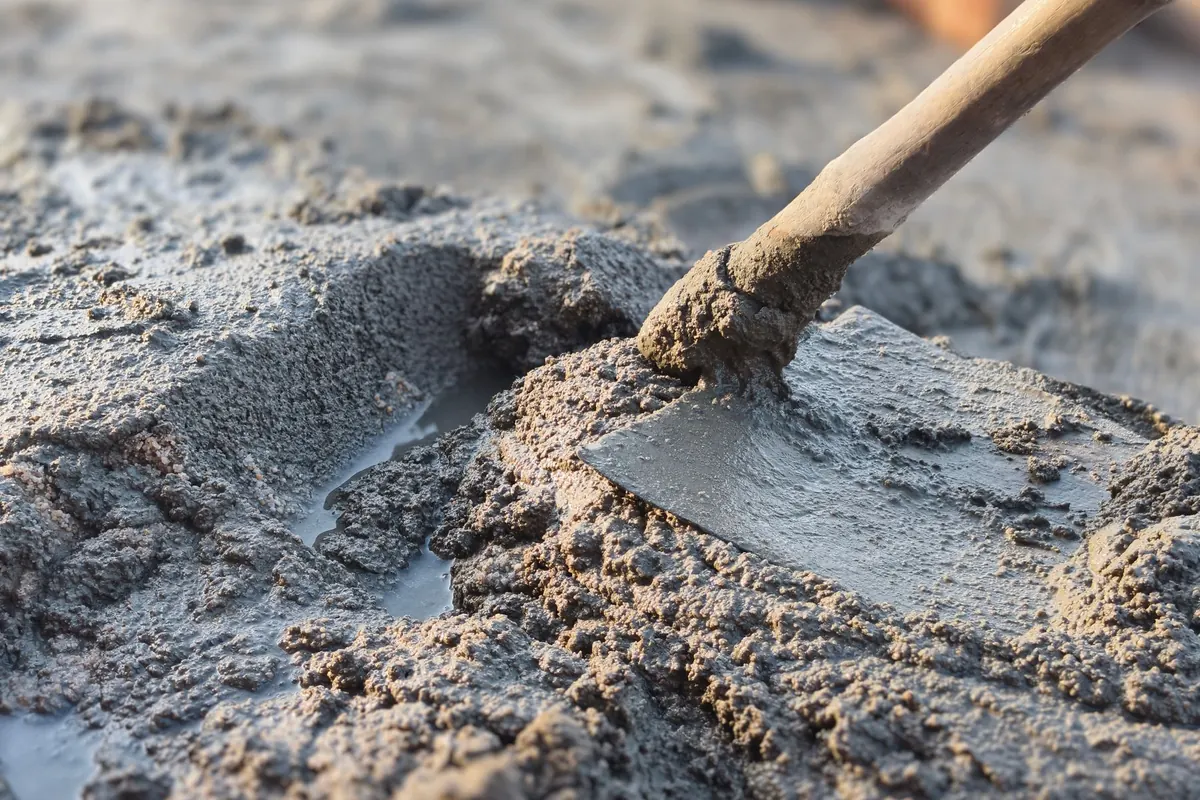
Close-up of a shovel working through wet concrete
Wet concrete being worked into place.

Rain and the vapor retarder

The rain rule matters in St. Cloud more than most places. Orlando's wet season runs from about May 24 to October 15 at the median and brings about 61 percent of the year's rain, much of it in afternoon storms. A slab crew in summer treats, covers with the 6 mil retarder and pours on a tight schedule, because rain on uncovered treated soil means treating it again. The rain and heat guide covers summer pours.

Patios, walks and the 1 foot rule

Treatment under exterior concrete

Section R318.1.6 extends soil treatment to all exterior concrete or grade within 1 foot of the primary structure's walls, and adds a vertical chemical barrier promptly after construction, retreated wherever the soil is disturbed later. A patio, a lanai extension or a walk poured against the house lands in that strip.

The inspection gap

R318.7 clearance between wall coverings and grade, with the slab exceptions
SituationClearance
General rule: exterior wall covering to final earth gradeAt least 6 in
Exception 3: above patio and garage slabs and entry areas4 in inspection space
Exception 4: soil-treated patio, masonry construction onlyMay match the interior finish floor elevation
Exception 2: access or vehicle ramps rising to the floorNone, for the width of the ramp

Source: 2023 Florida Building Code, Residential, Section R318.7 (as reproduced by Charlotte County). Exception 1 covers paint or decorative cementitious finish under 5/8 in thick on a masonry foundation wall.

Water away from the walls

Section R318.5 asks that condensate lines, irrigation risers for spray heads and roof downspouts discharge at least 1 foot from the structure, by piping, extensions or splash blocks. New concrete along a wall is the moment to move them.
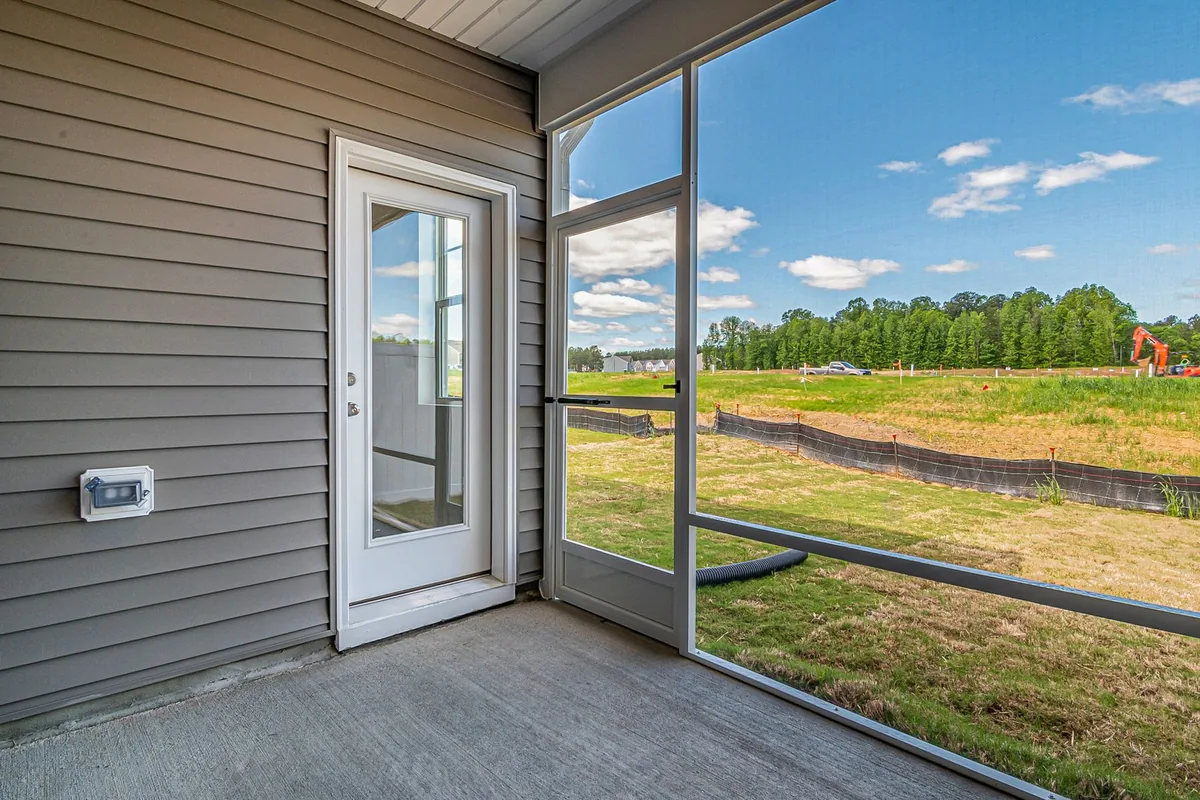
Concrete floor of a new screened porch beside a door, with a newly graded lot beyond the screen
The concrete floor of a new screened porch, before the furniture.
Get a Free Quote

Tell us the job and where it is. The quote is free.

Termite Slab Pretreatment: Questions

Aerial view of a Florida neighborhood of single-story homes, several with screened pool enclosures
Screened pool enclosures behind several homes in a Florida neighborhood.

Do you have to treat for termites before pouring a slab in Florida?

For new construction, yes: Section R318.1 of the Florida Building Code, Residential, requires termite protection by registered termiticides (soil-applied pesticides, baiting systems or wood treatments) or other approved methods. With soil treatment, the soil inside the foundation is treated after all excavation, backfilling and compaction is complete, before the slab.

Does a patio poured against the house need termite treatment?

When soil treatment is the method used, yes: Section R318.1.6 says chemical soil treatments shall also be applied under all exterior concrete or grade within 1 foot of the primary structure's walls, which takes in patios, walks and driveways that touch the house. That section is written for new construction; for a patio added to an existing home, ask the pest control company that holds the termite bond whether the new slab area needs treatment.

What happens if it rains after the soil is treated?

The soil is treated again. Section R318.1.4 requires the treated soil to be protected with a vapor retarder of at least 6 mil against rainfall dilution, and says retreatment is required if rainfall occurs before the vapor retarder is placed. Any work done before the pour has to avoid penetrating or disturbing the treated soil.

Who signs off on termite treatment for a new slab?

The licensed pest control company that applies it. Section R318.1 requires it to issue a certificate of compliance to the building department stating that the building has received a complete treatment for the prevention of subterranean termites, in line with Florida Department of Agriculture and Consumer Services rules. With a bait system, a signed monitoring contract goes to the building official before the slab is poured.

Planning a slab next to the house?

Send the size, what it is for and the address. The quote is free.

Get a Free Quote